
“I am running, swimming, and riding my bike. Why can’t my blood sugars improve, and why can’t I lose that stubborn belly?”
Pablo was diagnosed with prediabetes. This was concerning because diabetes runs in his family, and several family members had experienced severe complications, including amputations and even death.
Pablo knew this could be prevented.
He was not going to let this become his destiny.
So he went to his provider, was given information about the Mediterranean diet, and was instructed to exercise more.
Pablo got right on it.
He purchased foods to begin meal prepping and made a plan to start walking. He became disciplined and consistent. He walked a mile and a half every morning, swam four times per week, and rode his bicycle whenever possible.
Initially, things seemed promising. He felt more energetic and lost about five pounds during the first month.
Then things stopped moving.
So Pablo did what most motivated people do.
He worked harder.
He increased his morning walk from a mile and a half to two miles. He continued swimming and riding his bike whenever possible.
Instead of seeing better results, he became more tired.
His weight plateaued.
His energy began to fade.
Eventually those five pounds returned, along with a few more.
The Breaking Point
Several months later, Pablo went back to have his labs checked.
He was nervous.
Part of him was hopeful.
Part of him already knew what was coming.
The first punch landed when he stepped on the scale.
Despite all the walking.
Despite all the swimming.
Despite all the bike rides.
Despite all the meal prepping.
He had gained back the weight he had initially lost and added another two pounds on top of it.
Standing there in the exam room, it felt like a hammer coming down on him.
All that work.
All that sacrifice.
And now he was heavier than when he started.
The second punch landed a few days later.
The nurse called with his lab results.
His hemoglobin A1c had improved modestly, but he was still firmly in the prediabetes range.
The conversation shifted toward the possibility of adding medication if things continued moving in the wrong direction.
Pablo hung up the phone frustrated.
He felt like he was losing a fight that he had been giving everything he had to win.
He was following the recommendations.
He was exercising.
He was trying.
Yet it seemed as though the harder he pushed, the less his body responded.
He began to wonder if diabetes was simply his destiny.
That was when he reached out to Vanguard Metabolic Nutrition.

From Feeling Out of Control to Taking Charge
When we first met, I asked him a simple question.
“What is your favorite engine?”
Without hesitation, he answered.
“A Mustang Shelby GT500.”

I smiled.
“Good choice. Now tell me what fuel you would put in it.”
“Premium only.”
Then I asked him another question.
“If I took that Shelby engine and replaced it with a lawn mower engine, would premium fuel matter?”
He laughed.
“Not really.”
Exactly.
Most people spend their entire lives focusing on the fuel and forget about the engine.
Your metabolism is the engine.
As we age, become less active, lose muscle mass, and spend years carrying excess body fat, the engine begins to shrink.
At one point, Pablo may have been operating like a high-performance V8.
Over time, that engine slowly became smaller and less capable of handling fuel efficiently.
Walking, swimming, and biking were helping him burn off fuel.
But they were not rebuilding the engine.
To increase the body’s capacity to handle glucose, improve insulin sensitivity, and reverse the progression toward diabetes, we needed to build muscle.
We needed a bigger engine.
Walking, swimming, cycling, hiking, and other forms of cardio are excellent for cardiovascular health, endurance, mobility, and even improving insulin sensitivity. The mistake is believing they alone will rebuild the metabolic engine.
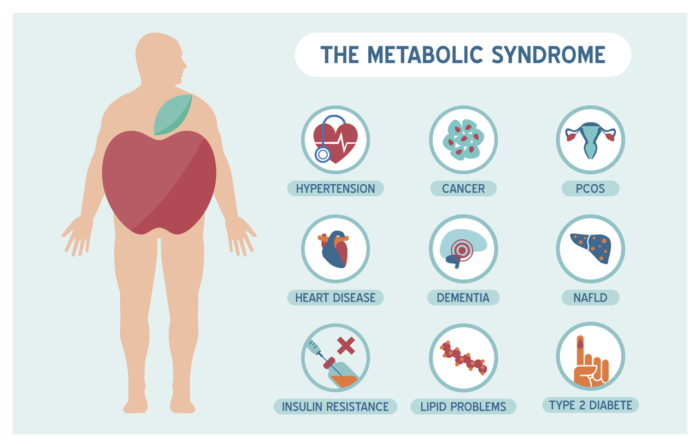
Why Muscle Matters
Skeletal muscle is the largest storage site for glucose in the body.
Think of it as your fuel reservoir.
The larger and healthier that reservoir becomes, the more room you have to safely store fuel instead of allowing it to circulate in the bloodstream.
The less muscle you have, the smaller that storage capacity becomes.
This is one reason why preserving and building muscle becomes increasingly important as we age.
You cannot build a bigger fuel tank by simply burning fuel faster.
So we set out to rebuild the engine.
We cut back on excessive cardio and focused on resistance training.
Nothing fancy.
No expensive gym memberships.
No complicated workouts.
We started with simple bodyweight exercises.
Bodyweight squats.
Modified pushups.
Scapular pullups.
One challenging set to near failure.
Most days of the week.
Then we gradually introduced resistance bands and progressed from there.
At the same time, we optimized his nutrition using the Vanguard Pyramid.
We focused on high-quality protein, plenty of fiber from fruits and vegetables, proper hydration, and reducing energy-dense foods that were not serving his goals at that stage of his journey.
A Different Way to Measure Progress
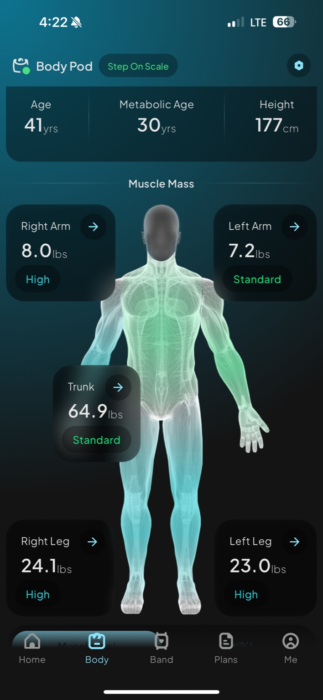
The first thing that surprised Pablo was that I was not obsessed with the number on the scale.
I cared far more about what the scale was made of.
Two weeks into the program, he stepped on our metabolic body composition scale.
The number was higher.
A few weeks earlier, that number would have ruined his day.
This time we looked deeper.
His hydration had improved.
He had gained more than a pound and a half of muscle.
He had lost approximately two pounds of body fat.
For the first time, he began to understand that weight and progress are not always the same thing.
Then came the numbers that really got his attention.
For months, his fasting blood sugars had lived between 110 and 120.
Now they were showing up at:
101
98
99
Those numbers may not seem remarkable to someone who has never struggled with elevated blood sugar levels, but to Pablo they represented something far greater.
They represented proof.
Proof that his body was responding.
Proof that he was moving in the right direction.
Proof that he was no longer losing control.
For the first time in years, Pablo felt like he was winning.
Within weeks, he reported:
• More energy
• Better focus
• Improved mood
• Increased strength
• Better recovery
• Clothes fitting looser around the waist
Most importantly, he no longer felt like a victim of his genetics.
He felt like he was back in the driver’s seat.
The scale measures your weight. Muscle determines what that weight can do.
Three Things You Can Do to Begin Building Your Dream Engine
1. Start with the Engine Block
Make your foundation solid by engaging your muscles consistently.
Focus on the basics:
Push.
Pull.
Squat.
If you have never strength-trained before, start with one set of each movement, three times per week.
The exercises can be modified based on your mobility, fitness level, injuries, and experience.
The key is to begin.
I advised Pablo that even on days when he felt tired or thought he couldn’t do it, he should perform the minimum dose rather than skip altogether.
This is critical because consistency is what builds muscle.
When motivation disappears, consistency becomes the engine.
2. Focus on High-Quality Protein
There seems to be a lot of confusion about which foods are truly high-protein and which are simply high-calorie foods that contain some protein.
The Mediterranean diet is a great foundation.
It encourages whole foods, fruits, vegetables, legumes, and healthy fats.
However, many people attempting to increase protein intake underestimate how much protein they are actually consuming.
Animal proteins generally provide the highest concentration of essential amino acids needed for muscle growth and maintenance. High-protein dairy products such as cottage cheese and Greek yogurt can also be valuable tools.
Soy is one of the few plant proteins considered a complete protein because it contains all essential amino acids.
Initially, we aimed for approximately 30 grams of protein per meal, three times per day.
As his strength, muscle mass, and training demands increased, we gradually increased protein intake accordingly.
3. Find the Minimum Effective Dose and Never Miss It
Skeletal muscle is a driver of energy, performance, blood sugar regulation, resilience, independence, and longevity.
Find the minimum amount of exercise you can consistently perform and commit to it.
Push hard when your energy is high.
Hold the line when your energy is low.
But do not quit.
If you miss one workout, make sure you do not miss the second.
That simple rule can change the trajectory of your health.
A Final Thought
For years, many people have been led to believe that burning more calories is the answer to diabetes, insulin resistance, and stubborn weight loss plateaus.
Walking, swimming, cycling, and other forms of cardio absolutely have value.
They improve cardiovascular fitness, endurance, mobility, and overall health.
The problem is that cardio alone does not rebuild the metabolic engine.
Skeletal muscle is the largest fuel tank in the body.
The more muscle you have, the more glucose you can store and use effectively.
The less muscle you have, the smaller that storage capacity becomes.
If we want to improve blood sugar control, reverse insulin resistance, and reduce the risk of diabetes progression, we must invest in building and maintaining skeletal muscle.
Let’s move away from obsessing over burning calories and start focusing on building capacity.
Cardio has its place.
Walking has its place.
Swimming has its place.
Cycling has its place.
But none of them replace the importance of building and maintaining skeletal muscle.
Your muscle is one of the most powerful investments you can make in your future health.
If your blood sugars are climbing, your energy is falling, and you’re frustrated despite doing everything you’ve been told, stop asking how many calories you can burn.
Start asking how powerful your engine is.
The answer may change the course of your health for decades to come.
Don’t wait another day to begin reclaiming your energy, your strength, and your life.
Discover your metabolic breakthrough and get your personalized blueprint today.